Which 3D Printing Technology Should You Choose? A Guide for Engineers
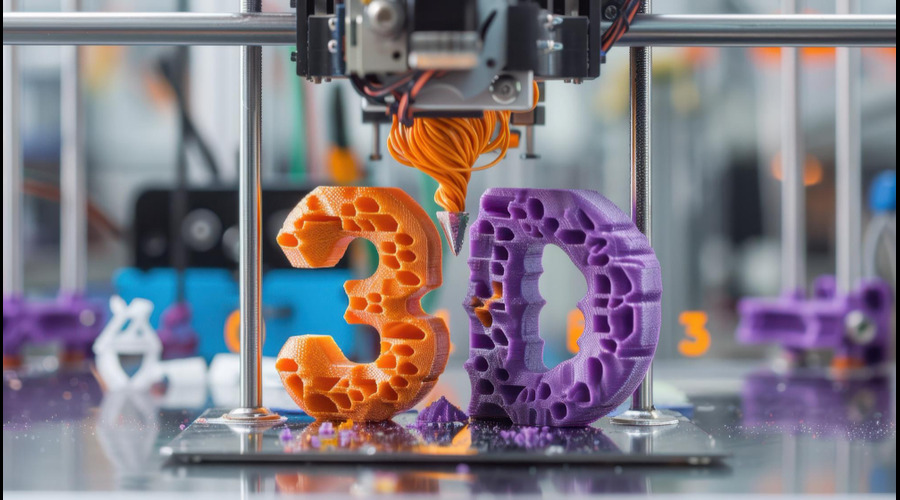
Selecting the right additive manufacturing process is the most critical decision in the product development lifecycle. For engineers and manufacturers, the choice isn’t just about “making a part”—it’s about matching material properties, surface finish, and structural integrity to the final application.
At Excel Rapidtech, we operate a high-tech facility in New Delhi that offers a range of industrial 3D printing services. This guide breaks down three primary technologies—SLA, SLS, and DLP—to help you choose the ideal process for your next project.
1. SLA (Stereolithography): For Maximum Precision and Surface Finish
If your primary requirement is aesthetic perfection or highest level of dimensional accuracy, SLA 3D printing is the industry standard.
- The Technology: Uses a UV laser to cure liquid resin into a solid plastic layer by layer.
- Our Infrastructure: We utilize the E Plus A800, a large-format industrial 3D printing system that ensures isotropic strength and watertight properties.
- Best Used For:
- Concept models and high-fidelity aesthetic prototypes.
- Master patterns for Vacuum Casting (Silicon Molding).
- Parts requiring an “injection-molded” look without heavy post-processing.
- Material Highlight: ABS-like resins that offer a smooth, milky-white or clear finish.
2. SLS (Selective Laser Sintering): For Durable, Functional Parts
When your parts need to survive end-use applications, mechanical testing, heat, or environmental stress, SLS 3D printing is the superior choice for industrial rapid prototyping in India.
- The Technology: A high-power CO2 laser sinters (fuses) polymer powder (Nylon) together. Because the part is surrounded by unsintered powder, no support structures are needed.
- Our Infrastructure: Powered by the EOS P396, ensuring consistent mechanical properties across the entire build volume.
- Best Used For:
- Functional prototypes and end-use industrial components.
- Complex geometries with internal channels or moving assemblies.
- Jigs, fixtures, and lightweight structural parts.
- Material Highlight: PA-12 Nylon and 30% Glass-Filled Nylon for extreme rigidity.
3. DLP (Digital Light Processing): For High Speed and Fine Detail
DLP technology is a resin-based process similar to SLA, but it uses a digital light projector screen to cure an entire layer of resin at once.
- The Technology: By projecting a single image of the entire layer, DLP 3D printing can achieve breakneck print speeds while maintaining microscopic detail.
- Best Used For:
- Small-format parts require high resolution and intricate features.
- Intricate components for electronics, medical devices, or jewelry master patterns.
- Quick-turnaround prototypes where speed is the priority.
- Why Choose DLP at Excel Rapidtech? It bridges the gap between the precision of SLA and the need for rapid iteration in small-scale, highly detailed parts.
Quick Comparison Table
| Feature | SLA | SLS | DLP |
| Surface Finish | Excellent (Smooth) | Matte (Grainy) | Excellent (Fine) |
| Durability | Moderate | High | Low-Moderate |
| Moving Parts | No | Yes | No |
| Accuracy | Highest | Good | High |
| Best For | Aesthetic parts, design validation | Functional and durable parts | Fine Details |
Why Partner with Excel Rapidtech for Your Selection?
Choosing a technology is only half the battle; you also need a 3D printing provider who can execute the end-to-end 3D printing services required for industrial success.
- Technical Consultation: Our engineers in Okhla, New Delhi, help you choose the process that fits your budget and mechanical needs.
- Quality Assurance: From the EOS P396 for nylon to the E Plus A800 for resin, we use only industrial-grade systems.
- Post-Processing: We offer full finishing services, including surface finishing, painting, and assembly.
Still Unsure Which Technology to Choose?
Don’t guess on your engineering projects. Let our team perform a technical feasibility review of your design to find the perfect fit between SLA, SLS, or DLP.
Recent Insights
-
What is the Vacuum casting process? Step-by-Step Explanation January 28, 2026
-
End-to-End 3D Printing Services for Engineers and Manufacturers February 17, 2026
-
Which 3D Printing Technology Should You Choose? A Guide for Engineers February 20, 2026
-
3D Printing Services in India: Complete Guide to Technologies, Materials and Applications July 14, 2026
-
How to Choose 3D Printing Services in India for Industrial Prototypes July 14, 2026
-
3D Printing Services in India: SLA vs SLS vs MJF vs DLP July 14, 2026
-
3D Printing Services in India: Cost, Lead Time and RFQ Checklist July 14, 2026
-
What Does a Professional 3D Printing Service Include? From CAD Review to Finishing July 14, 2026
-
In-House 3D Printing vs a Professional 3D Printing Service: Which Is Better? July 14, 2026
-
How a 3D Printing Service Supports Product Development and Low-Volume Production July 14, 2026
-
3D Printing Service Cost Guide: Materials, Quantity, Finish and Lead Time July 14, 2026
-
What Do 3D Printing Companies Do? Services, Processes and Industries Explained July 14, 2026
-
3D Printing Companies in India: 12 Capabilities Engineering Teams Should Compare July 14, 2026