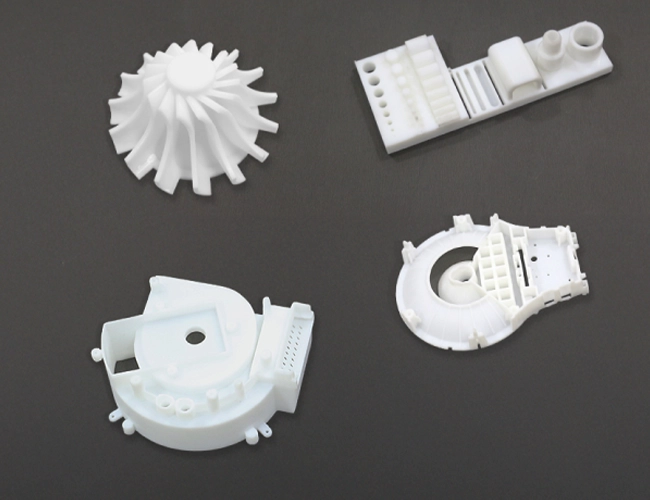
About SLA
Stereolithography (SLA) is the most popular resin based 3D printing process. It stands out due to its ability to produce accurate, isotropic, water-tight and smooth prototypes and end use parts.
In this process, liquid resin is hardened into plastic using laser source to create solid objects. A thin layer of resin over the build platform is cured to the cross section of the parts to be manufactured. The platform is then lowered one layer and the process continues. This process is repeated until the complete part is built.
Due to its benefits, almost all industries use parts made through SLA technology and the most common material is ABS – like resin.
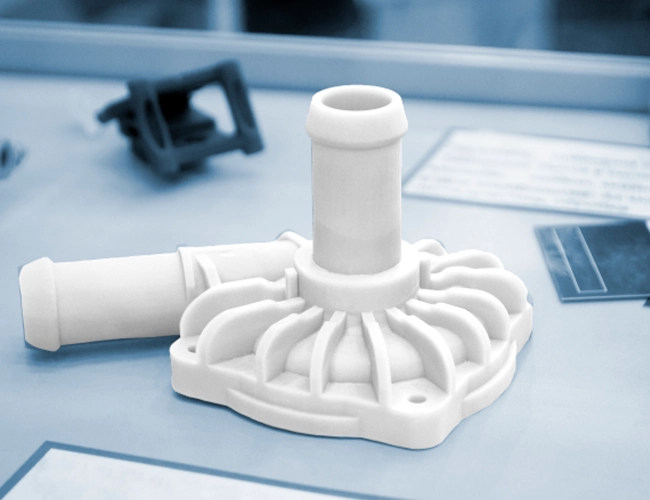
Advantages
Parts made through SLA technology have several advantages:
- Parts have a high dimensional accuracy as compared to other 3D printing processes.
- Intricate details can be achieved.
- Parts have a smooth surface, almost like injection moulded parts.
- Various material options are available like ABS, clear, flexible, etc.
- Minimal warpage and shrinkage.
- High resolution and uniform quality.
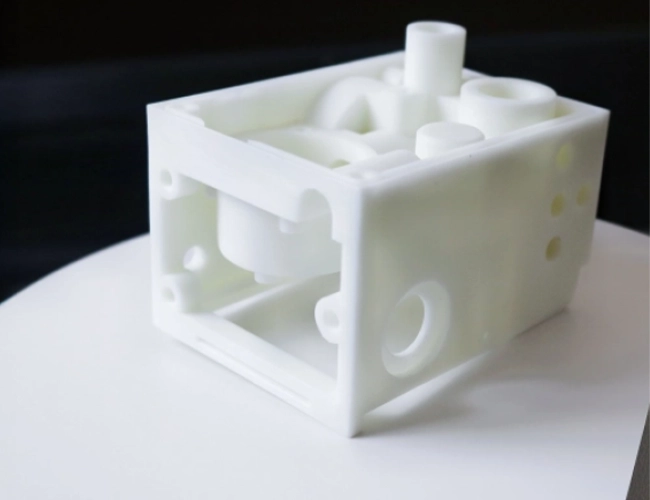
When to choose SLA
SLA is best suited when you require detailed, smooth and accurate parts for prototyping – concept models, functional prototype, validation testing.
Apart from prototyping, SLA can be used for:
- Master patterns for casting and moulding.
- Jigs & fixtures.
- Low volume manufacturing.
- Custom parts.
- Models.
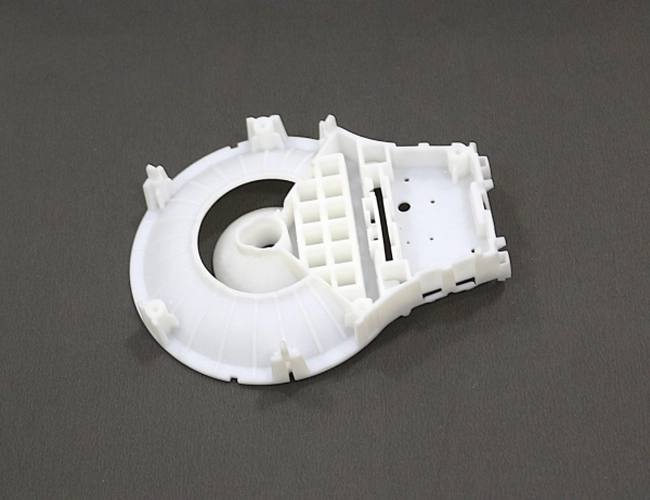
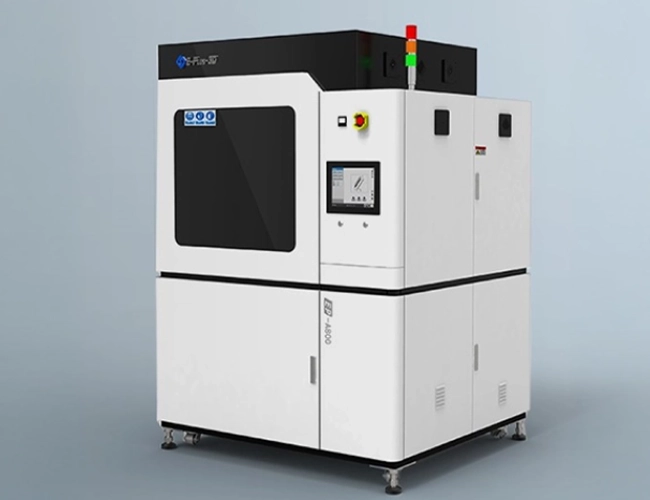
Machine Details
- Make: E Plus
- Model: A800
- Build Size: 800 x 800 x 550mm
- Print Layer Thickness: 100 um
Material Details
Material Details
This resin has enhanced strength and dimensional stability under humidity with great temperature resistance.
- Applications: Master patterns, conceptual models, common parts or functional prototypes for various industries.
- Typical part properties:
- Hardness: 77 – 88 Shore D
- Flexural strength: 70-74 MPa
- Tensile strength: 40 – 58 MPa
- HDT @ 66 PSI: 55 – 68 deg C
- Glass transition temperature: 60 – 75 deg C
- Density: 1.12 – 1.18
- Colour: Milky white